
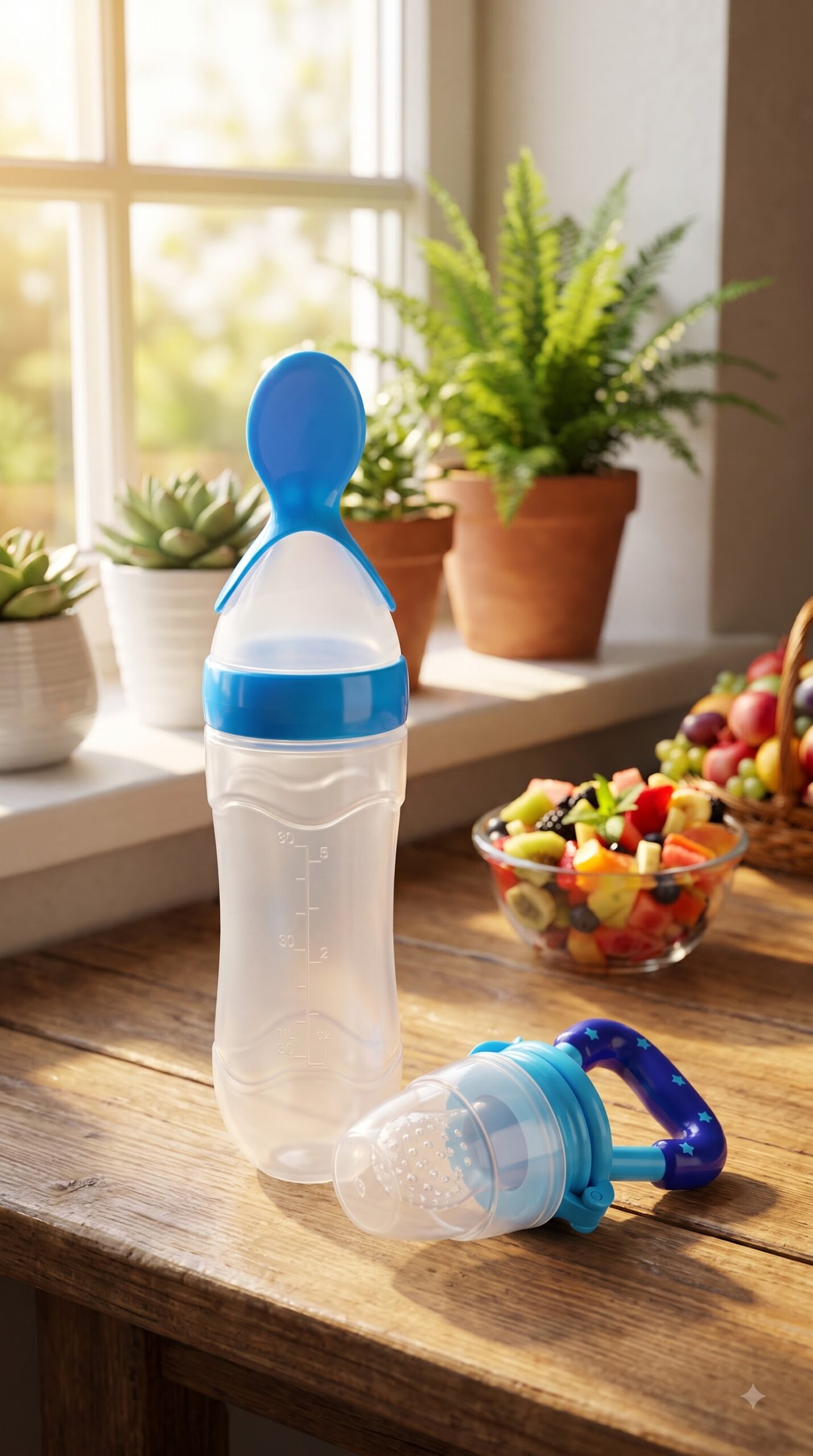
Looking to buy a silicone baby bottle with spoon? Discover how this mess-free feeder eases the transition to solids, plus top picks and safety tips.
Transitioning your baby from breast milk or formula to purees and semi-solid foods is one of the most exciting milestones of early parenthood. But let’s be honest: it can also be an utter mess. Between sticky fingers grabbing at bowls, spilled mashed bananas on clean bibs, and spoons flung across the high chair, feeding time can quickly turn into a full-scale cleanup operation.
If you have found yourself searching to buy a silicone baby bottle with spoon, you are certainly not alone. This clever, ergonomic gadget has become a viral nursery essential for modern parents looking to simplify mealtime without sacrificing nutrition or comfort.
In this in-depth guide, we explore how dispensing spoon bottles work, why pediatric feeding experts and parents love them, what to look for before buying, and where to grab the best deals today.
What Exactly Is a Silicone Baby Bottle With Spoon?
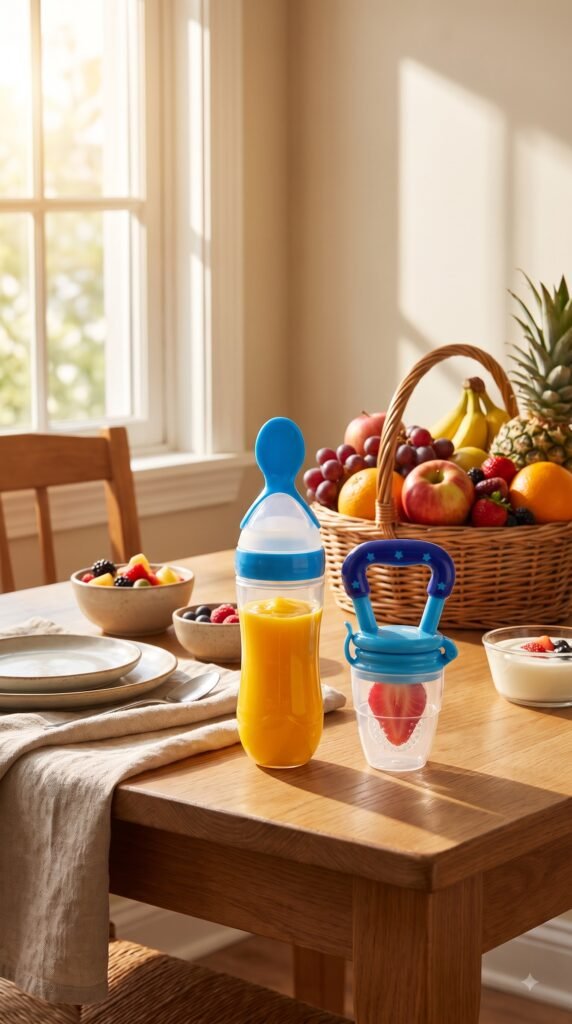
A silicone spoon feeder bottle combines two indispensable feeding tools into one handheld unit: a flexible, squeezable silicone reservoir bottle and an integrated soft feeding spoon tip.
Instead of balancing a bowl in one hand and dipping a tiny spoon with the other, you fill the bottle with pureed vegetables, fruit mash, oatmeal, or infant rice cereal. With a gentle one-handed squeeze, the food dispenses directly through a small aperture onto the attached spoon tip, allowing you to feed your baby smoothly, safely, and rhythmically.
Quick Product Snapshot:
- Capacity: Typically 90 ml (3 oz) to 120 ml (4 oz) — the ideal portion size for 4-to-12-month-old infants.
- Materials: 100% Food-Grade, BPA-free silicone bottle body with a soft silicone or PP spoon collar.
- Design: Leak-resistant sealing disc, protective travel cap, and standing suction base.
5 Practical Reasons Every Parent Needs a Squeeze Spoon Feeder

1. True One-Handed Feeding Freedom
Traditional spoon-feeding demands two hands: one to hold the slippery bowl and one to navigate the spoon into a moving baby’s mouth. Squeeze feeding bottles allow you to feed your baby with one hand while keeping your other hand free to gently wipe little chins, stabilize their seat, or comfort them.
2. Drastically Cuts Down on Mealtime Mess
Because the pureed food stays sealed within the flexible silicone body until you gently compress it, there are no open bowls for curious baby hands to knock over. Most quality models also feature an anti-leak baffle or disc, preventing food from spilling out while sitting on the high chair tray.
3. Ultra-Gentle on Tender Gums & Emerging Teeth
When babies reach the weaning stage (typically around 5–6 months), teething is often in full swing. Hard plastic or metal spoons can bump sensitive, swollen gums and create feeding aversion. Premium food-grade silicone is supple, rounded, and soft, doubling as a gentle teether as your baby explores new textures.
4. Encourages a Smooth Transition to Solid Food
Babies are accustomed to the sucking sensation of nursing or drinking from traditional bottles. A silicone spoon bottle acts as a sensory bridge: they still experience the soft touch of silicone, but they learn to accept food from a spoon and practice mouth closure and swallowing.
5. Perfect for On-the-Go Travel & Outings
Heading to a restaurant, park, or visiting family? Packing jars of puree, separate bowls, multiple spoons, and bibs can overload any diaper bag. A dispensing spoon bottle comes with a snap-on protective cover that seals the spoon, keeping it sterile and leak-free while traveling.
Where to Buy the Best Silicone Spoon Feeding Bottle
When you are ready to make feeding time stress-free, choosing a trusted, certified product is essential. Below are direct options tested for high durability, certified safety standards, and ease of cleaning:
- For International Shoppers (US / Global):
Check customer reviews, current deals, and global delivery directly on Amazon:
👉 Shop with Amazon World (Global Link) - For Shoppers in India:
Order locally with fast shipping and secure checkout:
👉 Shop with Amazon India (Direct Link)
(Tip: Ordering a two-pack is often practical so you always have one sanitized and ready while the other is in the wash.)
Key Features to Look for Before You Buy
Not all baby feeding products on the market meet the same safety standards. Before placing your order, keep this buyer’s checklist in mind:
| Feature | What to Look For | Why It Matters |
| Material Safety | 100% Food-Grade Silicone (BPA, BPS, PVC, Phthalate, and Lead-Free) | Ensures zero chemical leaching into warm purees or warm milk mixtures. |
| Clear Measurement Markings | Calibrated scale (ml & oz) stamped on the bottle wall | Lets you monitor exact intake and track baby’s daily nutritional goals. |
| Leak-Proof Sealing Baffle | Removable neck disc between spoon and bottle | Prevents liquid leaks in diaper bags during transit. |
| Suction Cup Base | Stable flat/suction bottom | Keeps the bottle standing upright on the table without tipping over. |
| Temperature Resistance | Safe from -20°C up to 120°C (Dishwasher/Sterilizer safe) | Allows thorough sanitization with boiling water or steam. |
Best Foods to Use with a Silicone Spoon Feeder
This versatile feeder handles a wide variety of initial solids, including:
- Smooth Single-Ingredient Purees: Steamed apple, pear, carrot, sweet potato, and pumpkin purees.
- Infant Cereals: Rice cereal or finely milled oats mixed with breast milk or formula.
- Soft Mashes: Silky ripe banana, avocado, or strained Greek yogurt.
- Medicines or Rehydration Fluids: For infants who refuse hard plastic medicine syringes, the gentle spoon tip offers a tear-free alternative.
Parent Tip: Ensure your purees are smoothly blended without large fibrous lumps, which can temporarily clog the dispensing hole.
How to Clean and Maintain Your Feeder Bottle
Hygiene is paramount when preparing food for little ones. Fortunately, silicone is naturally non-porous and resistant to bacterial buildup:
- Disassemble Completely: Detach the soft spoon, the ring collar, the sealing disc, and the silicone body.
- Wash Immediately After Use: Rinse with warm water and mild, baby-safe dish soap.
- Deep Clean & Sterilize: Because high-grade silicone is heat-resistant, you can safely boil the parts in hot water for 2–3 minutes or place them on the top rack of your dishwasher.
- Air Dry Thoroughly: Let all parts dry completely on a clean drying rack before assembling and storing with the cap on.
Frequently Asked Questions (FAQs)
What age is a silicone baby bottle with spoon suitable for?
Most pediatric guidelines suggest introducing semi-solids around 4 to 6 months of age, once your pediatrician confirms your baby has good head control and shows interest in food. It remains useful until roughly 12 to 18 months for smoothies and quick travel snacks.
Can I warm food directly in the bottle?
Yes. Food-grade silicone withstands high temperatures. You can place the filled silicone bottle in a warm water bath or bottle warmer. Always test the food temperature on your inner wrist before offering it to your baby.
Will colored purees (like carrots or beets) stain the silicone?
Natural food pigments like beta-carotene can occasionally cause slight discoloration in translucent silicone. To minimize staining, rinse the feeder under cold water immediately after feeding, or soak it in warm water with a drop of lemon juice or baking soda.
The Verdict: Is It Worth It?
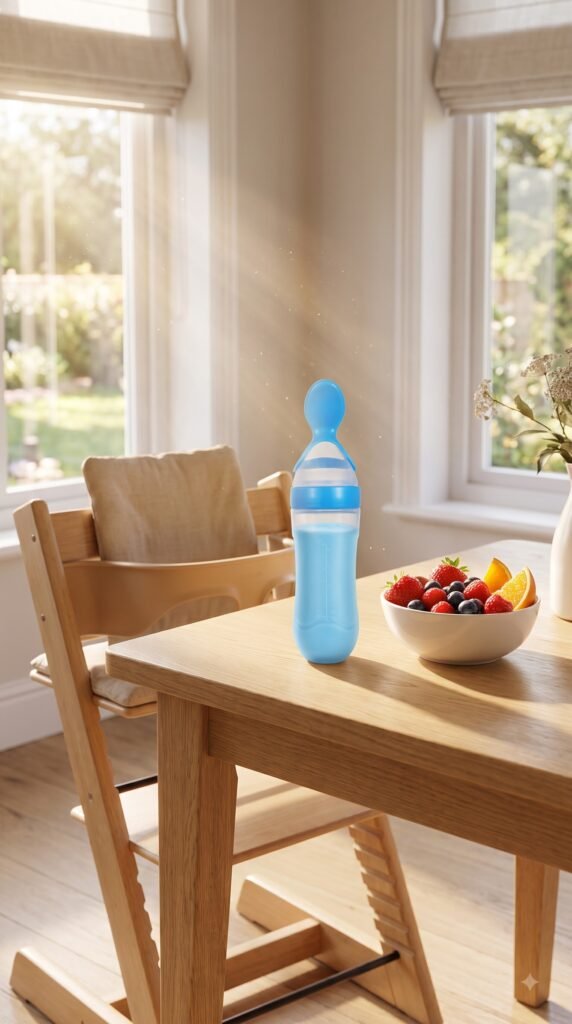
If you want to spend less time wiping pureed sweet potatoes off your furniture and more time enjoying milestones with your growing baby, investing in a squeeze spoon feeder is one of the smartest, most budget-friendly choices you can make. It is portable, soothing on sore teething gums, and turns messy meal routines into calm, bonding moments.
Ready to simplify your baby’s weaning journey?
- Grab your feeder globally via Amazon World
- If you are in India, pick it up today through Amazon India