Reusable Washable Sanitary Cloth Pads Napkins: The Complete Guide to Safer, Greener Periods

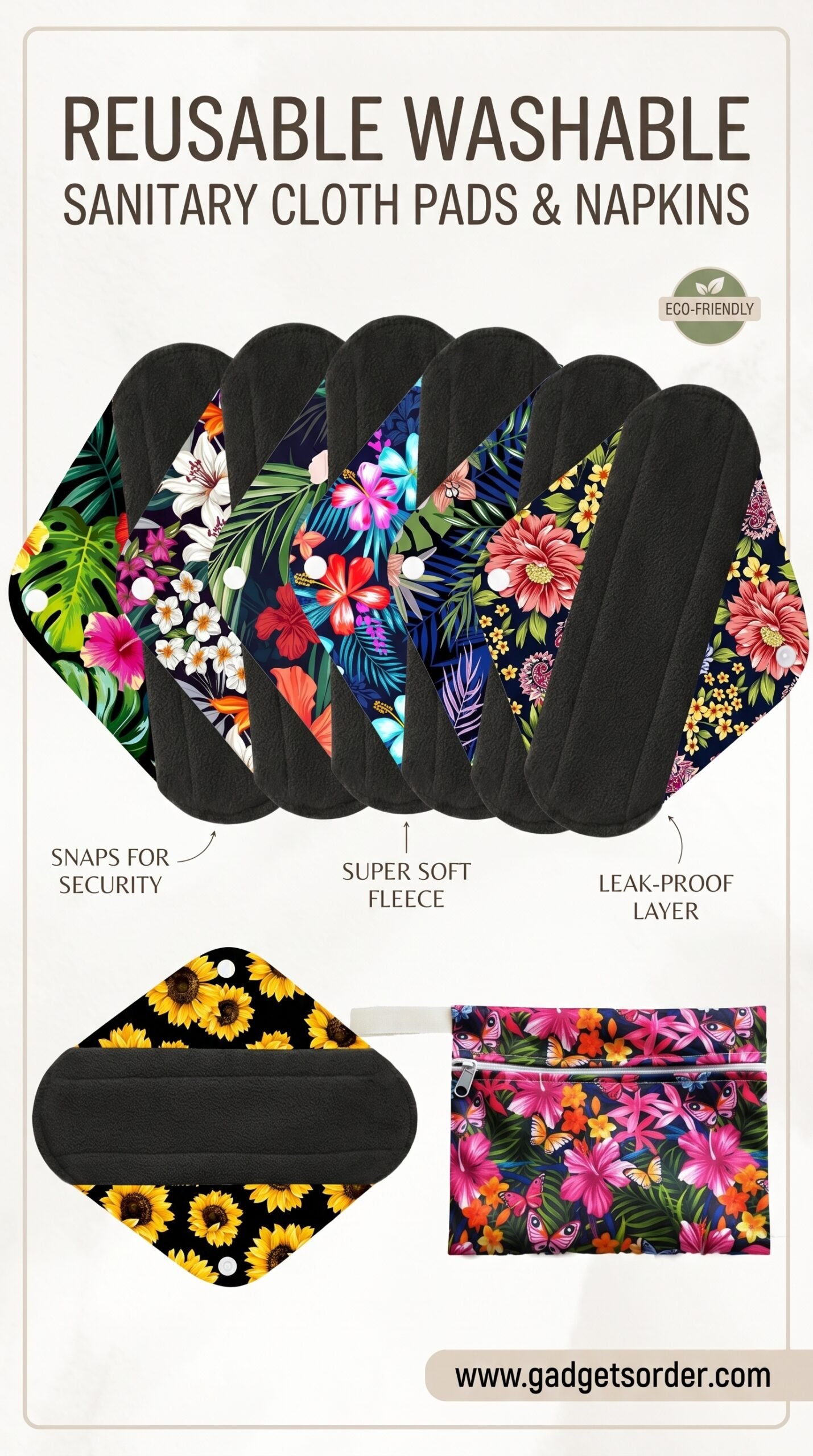
Switch to Reusable Washable Sanitary Cloth Pads — safer, eco-friendly & budget-smart. Read this complete guide before making the switch to cloth pads.
Every woman deserves a period experience that is comfortable, affordable, and kind to her body. Yet for decades, the only widely available option was a plastic-laden disposable pad — full of chemicals, bleached white with chlorine, and contributing to a mountain of non-biodegradable waste. That’s changing in 2026, and reusable washable sanitary cloth pads napkins are at the forefront of this much-needed revolution.
Whether you’re curious about making the switch, worried about hygiene, or simply looking for a smarter, more sustainable choice for your menstrual health, this complete guide has every answer you need.
What Are Reusable Washable Sanitary Cloth Pads?
Reusable washable sanitary cloth pads are fabric-based menstrual pads designed to be worn, washed, and used again — cycle after cycle, for years. Unlike disposable pads, they are made from layers of soft, breathable, organic or natural cotton fabric, with a leak-proof bottom layer and multiple absorbent inner layers to handle your flow reliably.
They work just like a disposable pad in terms of how you wear them — they sit in your underwear and are secured with snap-button wings that fasten underneath. The key difference is what happens after use: instead of throwing them away, you rinse, wash, and reuse. A high-quality cloth pad can survive over 100 washes, giving it a lifespan of approximately 2–3 years before needing replacement.
Why Reusable Cloth Pads Are Trending in 2026
The movement toward sustainable menstrual care has been building for years, but 2026 marks a tipping point. Women across India and the world are waking up to the real cost — financial, health, and environmental — of disposable pads, and making a permanent switch to cloth alternatives. Here’s what’s driving the trend:
- Health awareness — Disposable pads are bleached with chlorine, which produces dioxin, a chemical that can be absorbed through the highly permeable skin of the intimate area
- Environmental consciousness — Disposable pads are loaded with plastic that takes hundreds of years to decompose in landfills
- Rising cost of living — With every period requiring a fresh pack of disposables, women are increasingly looking for one-time investments that pay for themselves
- Social media education — Millions of women are sharing honest reviews and switching stories online, normalizing reusable period care
- Brand availability in India — Indian brands like FabPad, Avni, PeeSafe, and SuperBottoms have made high-quality cloth pads accessible and affordable across the country
Key Benefits of Reusable Washable Sanitary Cloth Pads
🌿 Safer for Your Body
Disposable pads contain plastic, synthetic fibers, fragrances, and chemical bleach — all in contact with one of the most sensitive and absorbent areas of the female body. Reusable cloth pads, made from organic cotton, allow the skin to breathe naturally, dramatically reducing the risk of rashes, irritation, and allergic reactions. Many women who switch to cloth pads also report a noticeable reduction in menstrual cramps — something attributed to the absence of plastic and chemicals pressing against the body throughout the day.
🌍 Better for the Environment
An average woman uses and discards around 11,000 disposable pads in her lifetime. Each one is made with plastic components that will outlast her by centuries in a landfill or ocean. By switching to reusable cloth pads, a single woman can eliminate thousands of pads from her personal waste footprint — a meaningful, tangible contribution to the planet.
💰 Saves Significant Money Over Time
The upfront cost of a pack of quality cloth pads may be slightly higher than a month’s supply of disposables. But cloth pads last up to 3 years with proper care. That means one purchase covers around 36 menstrual cycles — compared to buying disposables every single month. Over time, the savings add up to thousands of rupees, making cloth pads one of the smartest financial decisions a woman can make for her period care.
🩸 Comfortable and Customisable
Cloth pads are softer against the skin, move more naturally with the body, and come in a wide range of sizes — from pantyliners to overnight pads. Leading brands like Avni offer sizes ranging from Regular (240mm) to XXL (360mm) to accommodate all flow types and body shapes. The snap buttons on the wings ensure the pad stays firmly in place without the dreaded shift or bunch that many women experience with disposables.
🔒 Reduces Risk of Toxic Shock Syndrome (TSS)
TSS is a rare but potentially life-threatening condition typically associated with tampon use. Reusable cloth pads, used externally, carry essentially no risk of TSS, making them one of the safer menstrual product choices available.
🛒 Where to Buy — Best Deals Right Now
Ready to make the switch? Here are the two most trusted places to shop for reusable washable sanitary cloth pads right now:
🇮🇳 Buy on Amazon India
Browse India’s best selection of cloth pads with fast delivery, easy returns, and competitive pricing.
👉 Click Here to Buy on Amazon India
🌍 Buy on Amazon (Worldwide)
Available globally with Prime shipping — perfect for international buyers or sending as a gift.
👉 Click Here to Buy on Amazon (Worldwide)
What to Look For When Buying Cloth Pads
Not all cloth pads are made the same. Here’s exactly what to look for to make a smart purchase:
- 100% organic cotton top layer — This is the layer touching your skin; it must be free of synthetic fibers and chemicals for maximum comfort and safety
- Multiple absorbent inner layers — More layers mean better absorption, especially for heavy flow days
- Leak-proof bottom layer — A waterproof technical fabric on the underside prevents any leakage onto your underwear
- Snap-button wings — Secure fastening that holds the pad in place without adhesive
- Wash durability — Look for pads rated for 100+ washes; quality brands like FabPad and SuperBottoms meet this standard
- Available sizes — Choose a brand that offers multiple sizes — pantyliners, regular day pads, and overnight pads — so you’re covered for your entire cycle
- Plastic-free materials — For genuinely eco-friendly, rash-resistant use
- Antimicrobial certification — Some advanced brands like Avni offer laboratory-tested antimicrobial properties for infection protection
Reusable Cloth Pads vs. Disposable Pads: The Full Picture
| Feature | Reusable Cloth Pads | Disposable Pads |
|---|---|---|
| Material | Organic cotton, natural fabric | Plastic, synthetic fibers, chemicals |
| Skin Safety | ✅ Breathable, rash-resistant | ❌ Risk of rash, irritation, chemical exposure |
| Environmental Impact | ✅ Minimal — biodegradable | ❌ High — plastic waste for centuries |
| Cost Over Time | ✅ One-time investment, highly economical | ❌ Monthly recurring expense |
| Lifespan | ✅ 2–3 years / 100+ washes | ❌ Single use only |
| Menstrual Cramps | ✅ Many women report reduction | ❌ Plastic may worsen discomfort |
| TSS Risk | ✅ Essentially none | ⚠️ Low but present with some products |
| Convenience | ⚠️ Requires washing & drying | ✅ Easy to use and discard |
| Gift Suitability | ✅ Meaningful, sustainable gift | ❌ Generic |
The only real trade-off with cloth pads is the need for washing — but once you establish a simple routine, it becomes as natural as doing any other laundry.
How to Use Reusable Cloth Pads: Step by Step
Using cloth pads for the first time is straightforward:
- Before first use — Wash the new pads 2–3 times to enhance the absorbency of the cotton and bamboo layers
- Wearing — Open the snap buttons, place the pad in your underwear with the soft side facing up, then fold the wings under the gusset and snap securely
- Change frequency — Change every 4–6 hours depending on your flow, just like a disposable pad
- After removing — Rinse immediately under cold water to prevent staining
- On-the-go storage — Carry a small wet bag or dry bag to store used pads while out; most cloth pad sets include one
How to Wash Reusable Cloth Pads: The Right Way
Washing is simpler than most women expect. Here’s a proven, effective routine:
Step 1: Cold rinse immediately
Rinse the used pad under cold running water as soon as possible after removal. Cold water is essential — never use hot water at this stage as it will set blood stains permanently.
Step 2: Soak
Soak the pad in cold water for 30–40 minutes. You can add a small amount of mild, fragrance-free detergent or a tablespoon of baking soda to the soak water for extra cleaning power.
Step 3: Hand wash or machine wash
After soaking, gently hand wash with a mild detergent, or place pads in a mesh laundry bag and machine wash on a gentle cycle with cold or lukewarm water. Never use fabric softener — it reduces the absorbency of the fabric and makes the pads less effective.
Step 4: Dry in sunlight
Air dry your pads in direct sunlight whenever possible. UV rays from sunlight act as a natural disinfectant and help remove any remaining stains. If indoor drying is necessary, ensure good air circulation and never store them until completely dry to prevent mould or bacteria.
Pro Tips:
- Add a few drops of white vinegar to the final rinse for softness, especially in hard water areas
- Add a few drops of lavender or tea tree essential oil to the soak water for a naturally fresh scent
- Use powdered detergent rather than liquid for deeper stain removal
Are Reusable Cloth Pads Hygienic?
This is the most common question — and the honest answer is: yes, absolutely, when cared for properly. Gynaecologists and health experts confirm that reusable cloth pads are safe and hygienic when users follow proper washing and drying routines. The key is ensuring pads are fully dried before storage, as moisture is the only environment where bacteria can grow.
In fact, because cloth pads are free from synthetic chemicals and plastic barriers that trap heat and moisture, many women find them more hygienic in practice than disposables. Breathable cotton actually allows air circulation that synthetic materials block entirely — reducing the warm, damp environment that bacteria thrive in.
How Many Cloth Pads Do You Need?
A practical starter set for most women would include:
- 4–6 regular day pads for use during the day on normal flow days
- 2 overnight or XL pads for heavier flow days and nights
- 1–2 pantyliners for lighter days or spotting at the start and end of a cycle
- 1 wet bag for carrying used pads when out of the home
This gives you a sufficient rotation so that washed pads have time to dry fully before being needed again. Many quality brands offer starter packs with this exact combination at a bundled price.
Real Voices: What Women Are Saying
Women across India and globally who’ve made the switch are consistently passionate advocates. One reviewer shared: “I had constant rashes from disposable pads for years. Within one cycle of switching to cloth pads, the rashes disappeared completely.” Another noted: “My menstrual cramps reduced noticeably — I never made the connection before, but the plastic was definitely contributing.”
In a YouTube review testing multiple Indian brands including FabPad, Avni, and PeeSafe, the reviewer called switching to cloth pads “not just great for the environment but the need for many stuck in period poverty” — highlighting how reusable pads also serve as a powerful tool of financial empowerment for women in lower-income communities.
Final Thoughts
Reusable washable sanitary cloth pads napkins are not a step backward — they are a step forward. A step toward a healthier body, a cleaner planet, and a smarter approach to the monthly reality that half the world’s population lives with. They are softer, safer, more economical, and more environmentally responsible than any disposable option on the market.
The switch may feel unfamiliar at first, but thousands of women who’ve made it say the same thing: they only wish they had done it sooner. Your first pack is one simple click away.
🛒 Buy on Amazon India | 🌍 Buy on Amazon Worldwide
Disclosure: This post contains affiliate links. We may earn a small commission if you purchase through these links, at no additional cost to you. We only recommend products that genuinely add value to your life.