
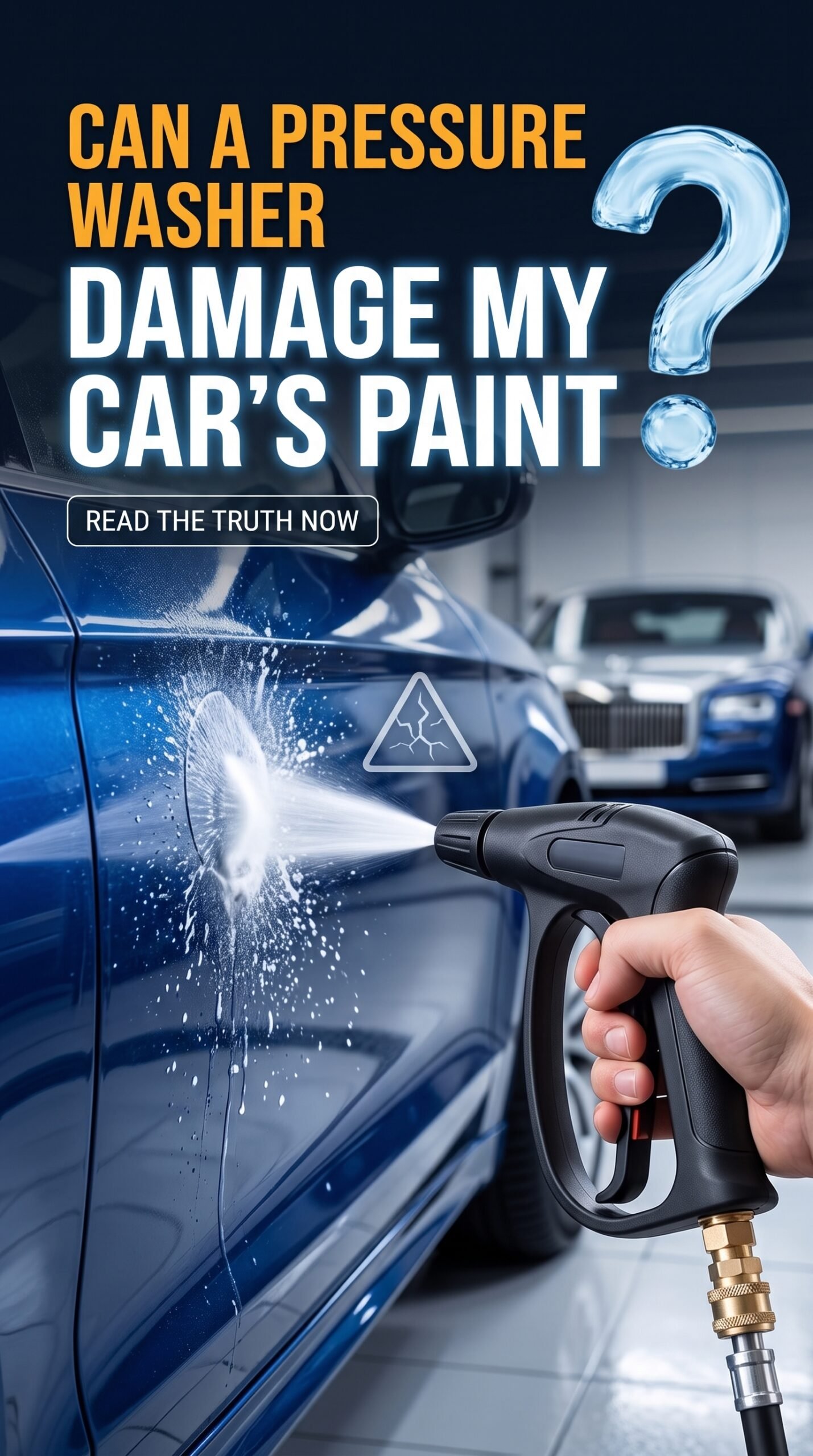
Worried about pressure washer damage to your car’s paint? Discover safe PSI levels, nozzle tips & the best 2-in-1 undercarriage washer to clean your car safely.
Can a Pressure Washer Damage My Car’s Paint? The Honest Truth Every Car Owner Needs to Know
You’ve just bought a pressure washer. It’s powerful, it looks impressive, and you’re dying to blast away the mud caked under your wheel arches. But then a nagging doubt creeps in — “What if this thing strips my car’s paint?”
You’re not alone. This is one of the most Googled car care questions for a reason. The short answer? A pressure washer CAN damage your car’s paint — but only if you use it incorrectly. Used the right way, it’s one of the safest and most effective car washing tools you can own.
Let’s break down everything you need to know.
What Actually Causes Paint Damage?
The pressure washer itself isn’t the villain. The real culprits are too much PSI, the wrong nozzle angle, and holding the wand too close to the surface.
Think of it like a knife — a kitchen knife is safe in skilled hands but dangerous when misused. A pressure washer operates on the same logic. The force of water becomes abrasive when concentrated, especially on a clear coat that’s already chipped, aged, or poorly applied.
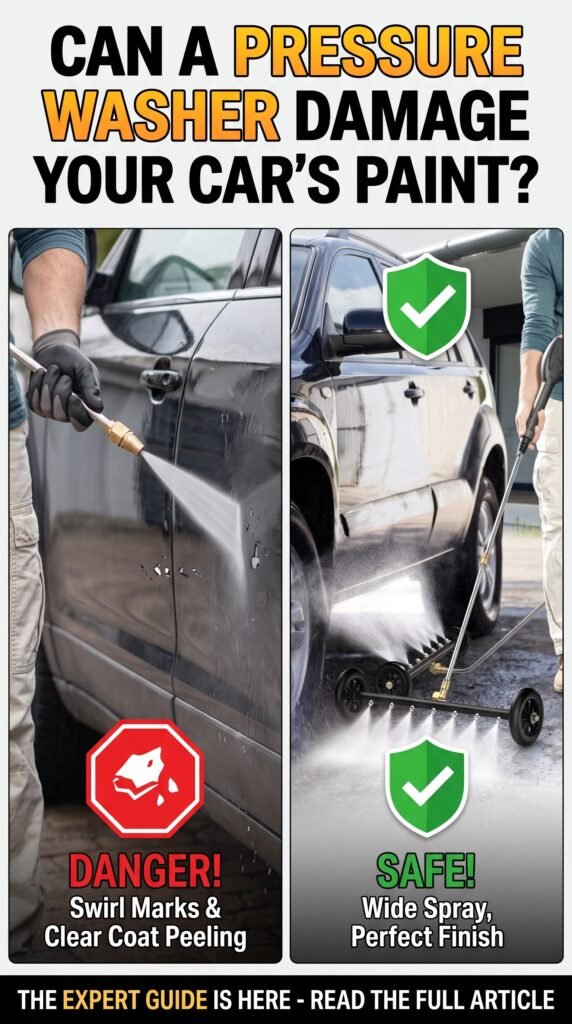
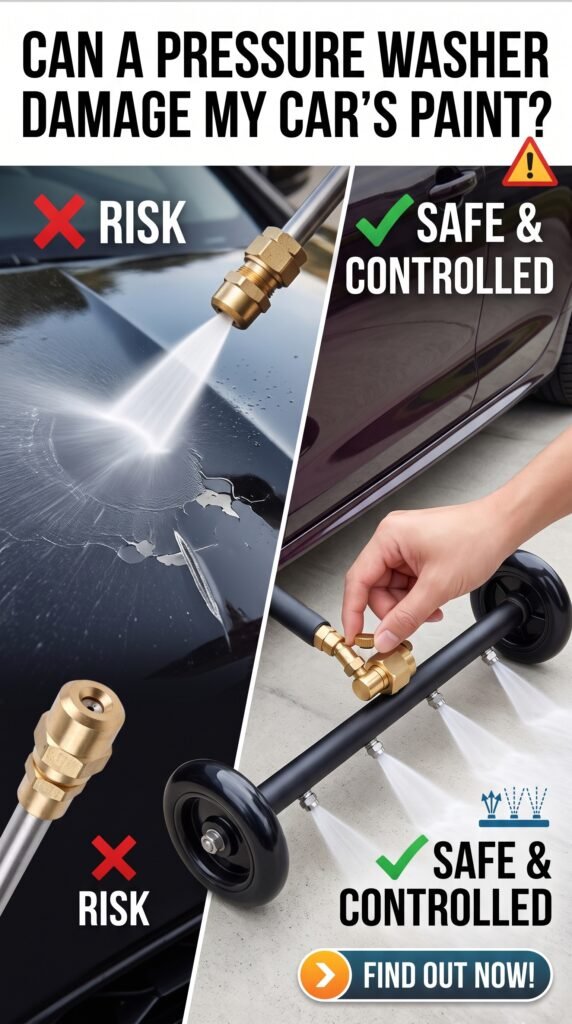
The most dangerous scenario: using a 0-degree (red) nozzle tip directly on painted bodywork. This pinpoint stream can locate a microscopic flaw in your paint and blow it wide open.
The Safe PSI Range for Washing Your Car
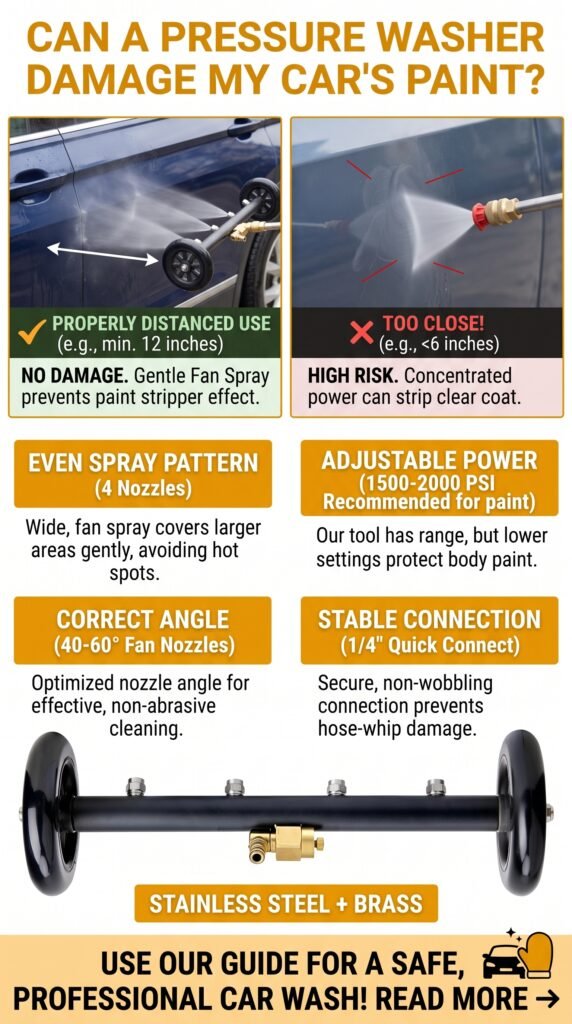
Here’s the critical number every car owner should memorise: 1,200 to 1,900 PSI is the sweet spot for safely washing painted surfaces.
Anything beyond 2,000 PSI dramatically increases the risk — especially on soft, modern water-based paint finishes. The table below shows the safe operating range by surface type:
| Surface | Safe PSI Range | Recommended Distance |
|---|---|---|
| Painted Body Panels | 1,200 – 1,900 PSI | 18–24 inches |
| Wheels & Tires | 1,500 – 2,200 PSI | 12–18 inches |
| Undercarriage | Up to 2,500 PSI | At least 12 inches |
| Trim, Emblems & Seals | 1,000 – 1,400 PSI | 24 inches or more |
Always use a 25° or 40° wide-angle nozzle on painted surfaces, and never linger the stream in one spot.
5 Pressure Washer Mistakes That Will Destroy Your Paint
Most paint damage from pressure washers comes from avoidable rookie errors. Here are the five biggest ones:
- Using a 0-degree nozzle on paintwork — This concentrated jet is only safe for concrete or driveways, never car paint.
- Standing too close — Less than 12 inches from the surface multiplies the impact pressure dramatically. Always maintain at least 30 cm of distance.
- Washing from the bottom up — This pushes dirty water back over clean panels. Always rinse top to bottom.
- Skipping the pre-rinse — Pressure washing a dry, dirt-covered surface turns dust particles into tiny sandpaper. Pre-soak first.
- Pressure washing rust spots or chipped paint — If paint is already compromised, high pressure will peel it further and expose bare metal to rust.
Parts of Your Car You Should NEVER Pressure Wash
While a pressure washer is brilliant for exteriors, some areas are strictly off-limits:
- The engine bay — Water can destroy electronics, sensors, and ignition components
- Rubber door seals and window trims — Water forced under seals leads to interior dampness and mould
- Plastic interior panels — High pressure will crack or warp these
- Convertible soft tops — Unless specifically designed for pressure washing, this will damage the fabric
How to Safely Pressure Wash Your Car: Step-by-Step
Follow this process and you’ll get a showroom-level clean without a scratch:
- Close all windows, doors, and the boot before you begin
- Start with a 45° nozzle and do a full pre-rinse to remove loose dirt
- Apply foam soap or detergent using a foam cannon — let it dwell for 2–3 minutes
- Switch to a 25° nozzle and wash panel by panel, keeping at least 30 cm away
- Rinse from top to bottom to prevent dirty water from running over clean areas
- For undercarriage and wheels, you can increase to 2,200–2,500 PSI safely
- Dry immediately with a microfibre towel to prevent water spots
The Smart Solution: A 2-in-1 Undercarriage & Surface Pressure Washer Attachment
Here’s where things get exciting for serious car owners. The traditional pressure washer wand is great for body panels, but your undercarriage is a different story — it’s where salt, mud, and road grime accumulate and cause the most long-term damage through rust.
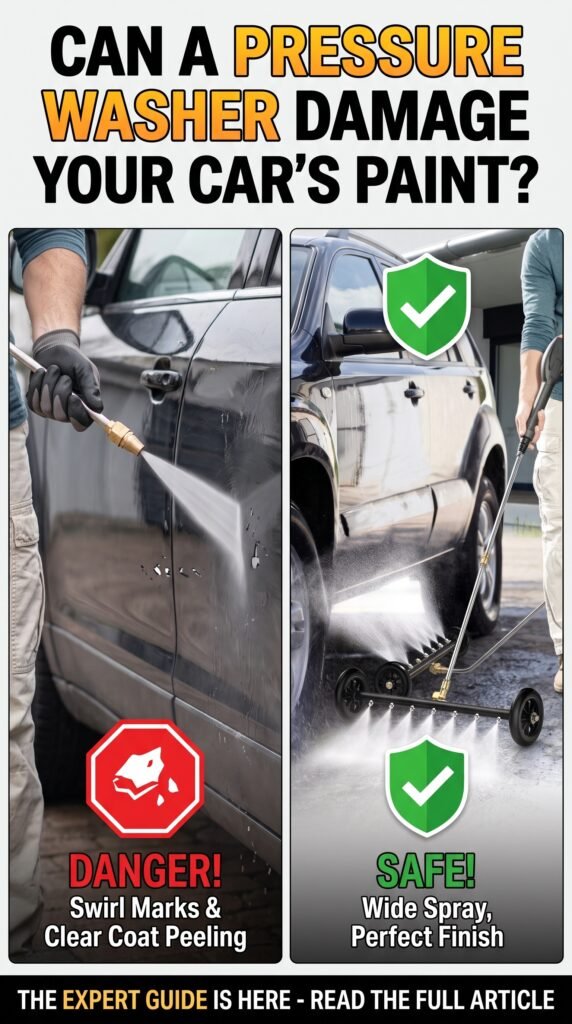
This is why the 2-in-1 Undercarriage Pressure Washer Attachment (as shown in the image above) is a game-changer. It features:
- Multiple rotating spray nozzles mounted on a wheeled bar that rolls smoothly under your car
- A fan-pattern spray that covers the full undercarriage width evenly, eliminating the risk of concentrating pressure on one spot
- Wheeled design for effortless gliding under the vehicle without bending or guessing nozzle angles
- Universal connector compatible with most standard pressure washers
- Dual functionality — flip it upright to clean flat surfaces like driveways, decking, and patios
The rolling wheel design is genius because it naturally maintains a safe, consistent distance between the nozzles and your car’s undercarriage — meaning zero risk of holding the wand too close, which is the #1 cause of pressure washer paint damage.
🛒 Get Yours Here:
👉 Shop on Amazon India — Click Here to Buy
👉 Shop on Amazon (Worldwide) — Click Here to Buy
Does Paint Protection Film (PPF) or Ceramic Coating Help?
Yes — significantly. If your car has a Paint Protection Film (clear bra) applied, pressure washing is considered safe as long as you avoid aiming the jet near film edges, which can cause lifting.
Ceramic coatings are actually pressure washer-friendly by design — the hydrophobic surface causes water to bead and run off easily, meaning you need less pressure to achieve a clean result in the first place. However, even ceramic-coated cars should follow the same PSI guidelines above.
When Should You Avoid Pressure Washing Your Car?
There are specific situations where even a correctly used pressure washer is the wrong choice:
- Classic or vintage cars — Older paintwork is more brittle and chips more easily under pressure
- Fresh paint jobs — New paint needs at least 30 days to fully cure before pressure washing
- Cars with visible rust patches — High-pressure water accelerates corrosion on exposed metal
- Washing near gravel or loose stones — Water can flick debris at high velocity into your paintwork
Final Verdict: Safe or Risky?
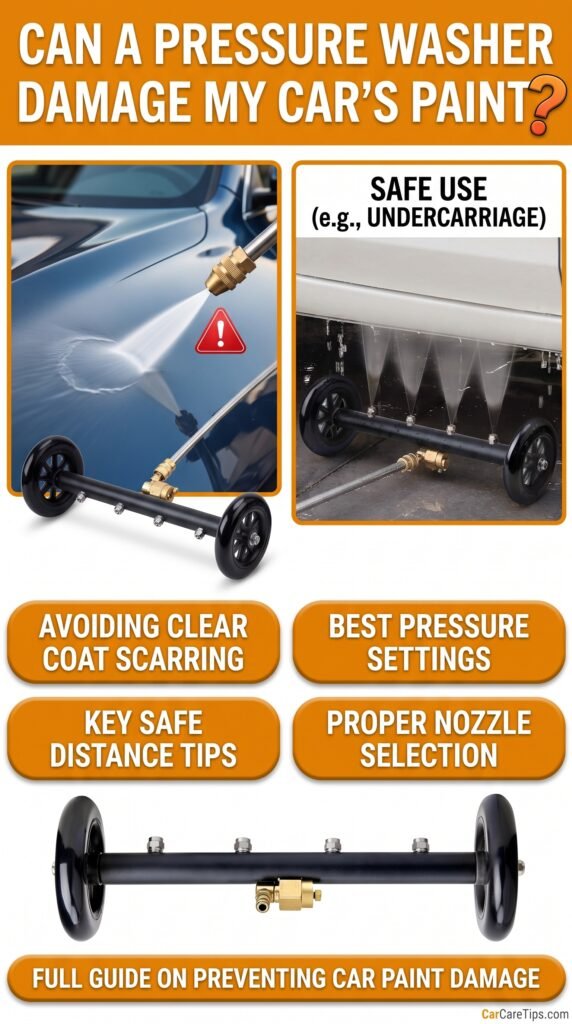
Used correctly, a pressure washer is completely safe for your car’s paint. The golden rules are simple: stay below 1,900 PSI for body panels, use a 25°–40° wide fan nozzle, maintain at least 12 inches of distance, and never aim at damaged or chipped paint.jimbosdetailing+1
For undercarriage cleaning specifically, a dedicated rolling undercarriage attachment removes all the guesswork — it’s the single best upgrade any home car washer can make. It protects your paint, cleans more efficiently, and prevents the rust that silently destroys cars from the bottom up.
🛒 Ready to Clean Smarter?
👉 Buy on Amazon India — Best Price Today
👉 Buy on Amazon (International) — Check Availability
Invest in the right tools, follow the right technique, and your car will stay clean, protected, and paint-perfect for years to come.
💡 Pro Tip: Always test your pressure washer on a small, hidden area of the car (like inside the door jamb) before doing a full wash — this lets you confirm the pressure and nozzle are set correctly without risking visible damage.